


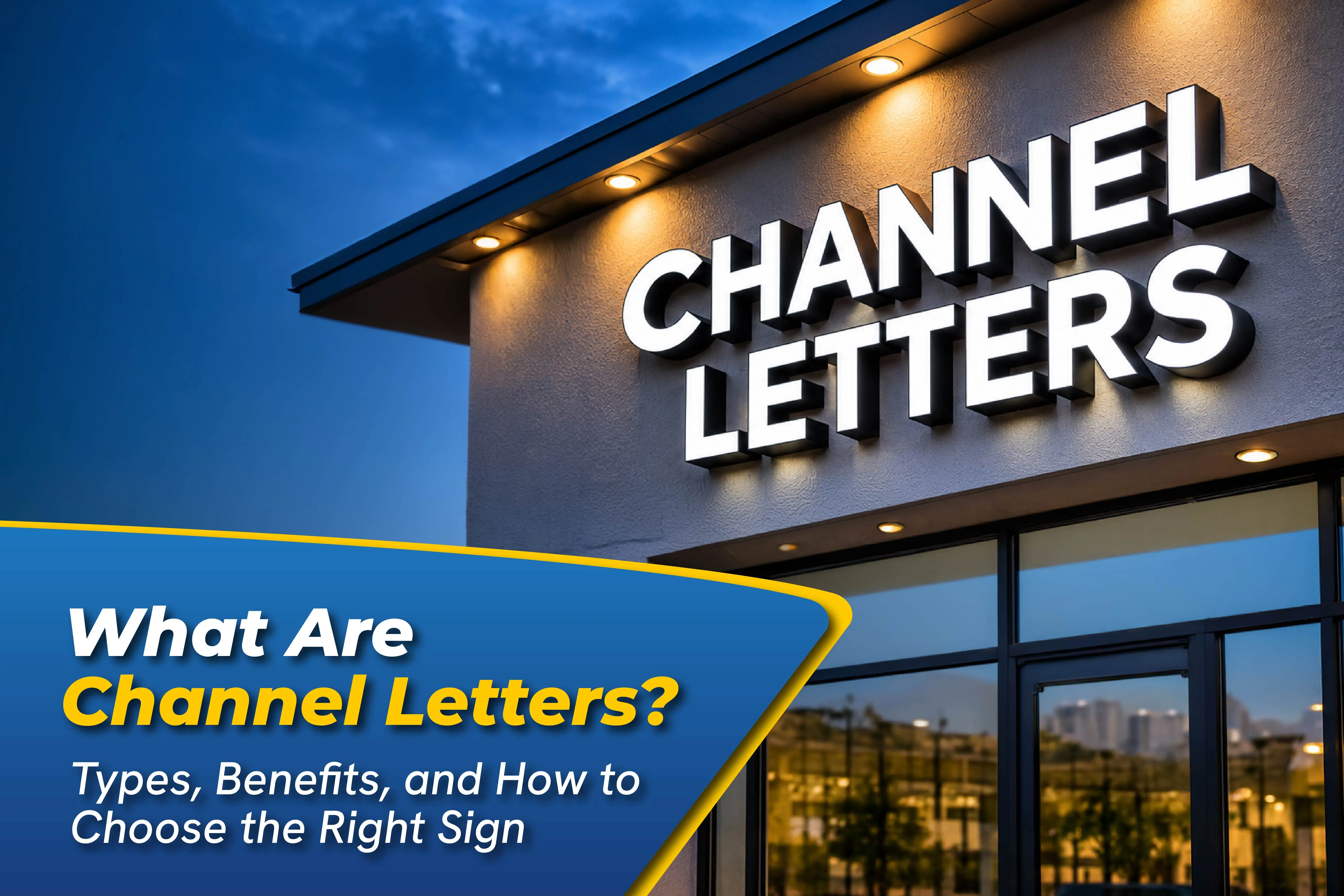
What Are Channel Letters? Types, Benefits, and How to Choose the Right Sign
Quick takeaways: Channel letters are dimensional signs used to display a business name or logo. Choose from front-lit, halo-lit, combination-lit, and non-illuminated styles based on visibility, facade conditions, letter size, mounting, permits, and long-term maintenance.
When someone approaches your storefront, can they recognize your business at a glance? A clear, well-positioned sign helps customers locate your entrance and connect the building with your brand. Channel letter signage is one way retail storefronts and commercial properties achieve that visibility.
This guide explains how channel letters work, the main styles, how they compare with cabinet signs, and what to consider before ordering custom exterior signage.
What Are Channel Letter Signs?
Channel letter signs are three-dimensional letters or shapes individually fabricated for storefronts and commercial buildings. They commonly display a business name, logo, or other brand elements and can be illuminated or non-illuminated.
Unlike flat lettering, channel letters have depth. Illuminated versions commonly use LEDs for visibility after dark, while non-illuminated designs provide raised lettering without internal lighting. Fonts, colors, dimensions, finishes, and lighting configurations can be customized to suit a building and brand.
How Do Channel Letters Work?
A typical channel letter is built from several components:
- Face: The front surface, often translucent acrylic on front-lit designs.
- Returns: The sides that give the letter its depth and shape.
- Back: The rear panel or enclosure, with construction varying by illumination style.
- Lighting: LED modules and electrical components used in illuminated configurations.
- Mounting system: A raceway, individual mounts, or another engineered and approved attachment method.
The exact materials and construction depend on the design. Illuminated letters also require appropriate power supplies, wiring, and installation that meets applicable electrical and building requirements.
Where Are Channel Letter Signs Commonly Used?
Channel letters are commonly used on retail stores, restaurants, hotels, shopping centers, medical offices, banks, and corporate buildings. They work especially well when a business needs its name displayed prominently on an exterior facade. The right size, contrast, placement, and lighting determine how clearly the sign can be seen.
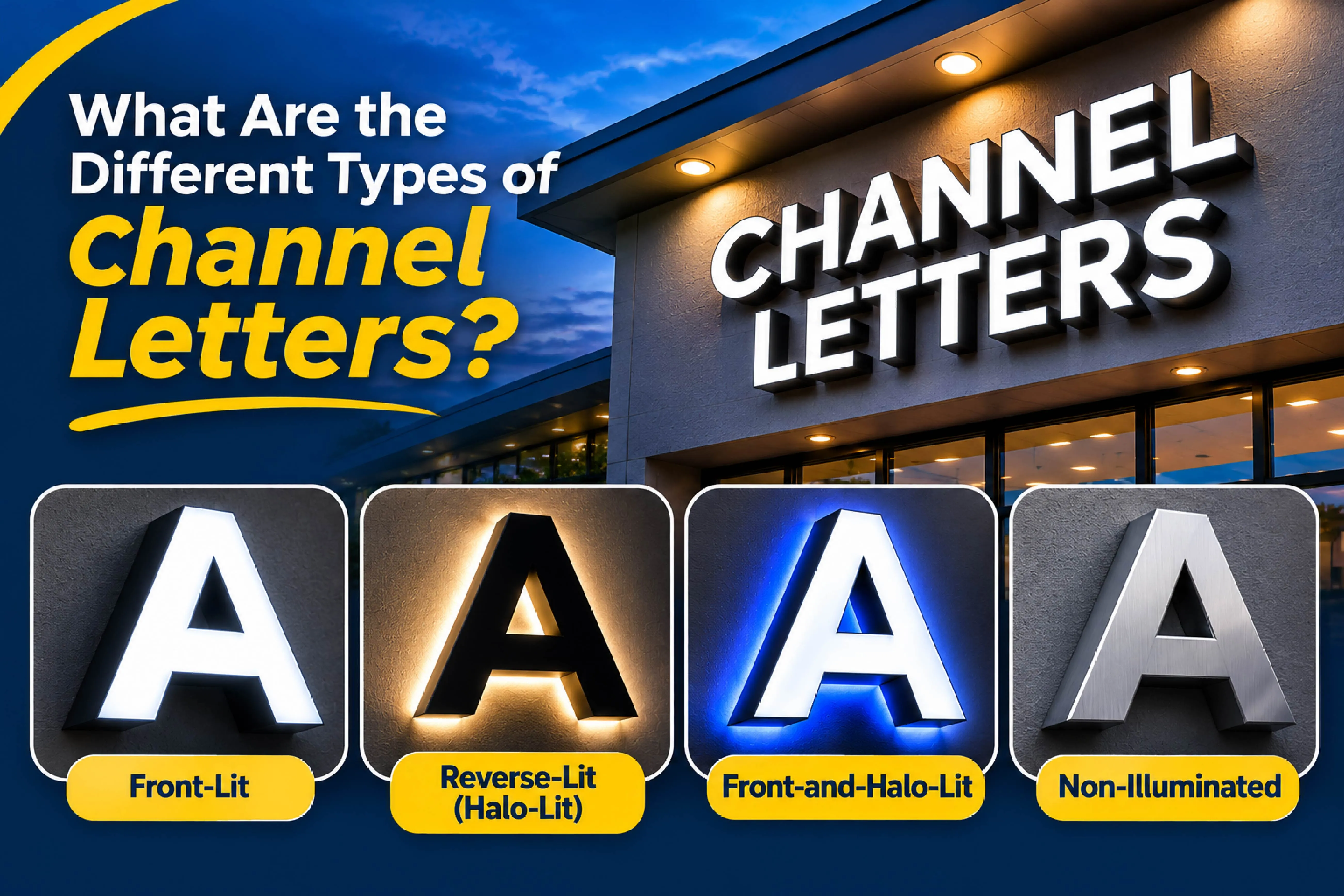
What Are the Different Types of Channel Letters?
The best style should complement the building, branding, visibility requirements, and budget—not just look attractive in a design proof. The four common configurations are explained below.
Front-Lit Channel Letters
Front-lit letters illuminate through translucent front faces. LEDs inside each letter make the business name visible in low-light conditions. This versatile style is common on restaurants, retail stores, and shopping centers.
Reverse-Lit (Halo-Lit) Channel Letters
Reverse-lit letters direct light toward the wall behind them, producing a reflected halo around the letter shapes. They are typically spaced away from the mounting surface; the effect depends on wall color, texture, spacing, and lighting design.
Front-and-Halo-Lit Channel Letters
This combination illuminates the front face while also casting light behind the letters. It can create a distinctive look, but the lighting effects should remain readable and appropriate to the building and brand.
Non-Illuminated Channel Letters
Non-illuminated letters provide raised, dimensional branding without internal lighting. They may suit daytime-focused businesses or buildings with sufficient external illumination. Material, finish, contrast, and placement remain important.
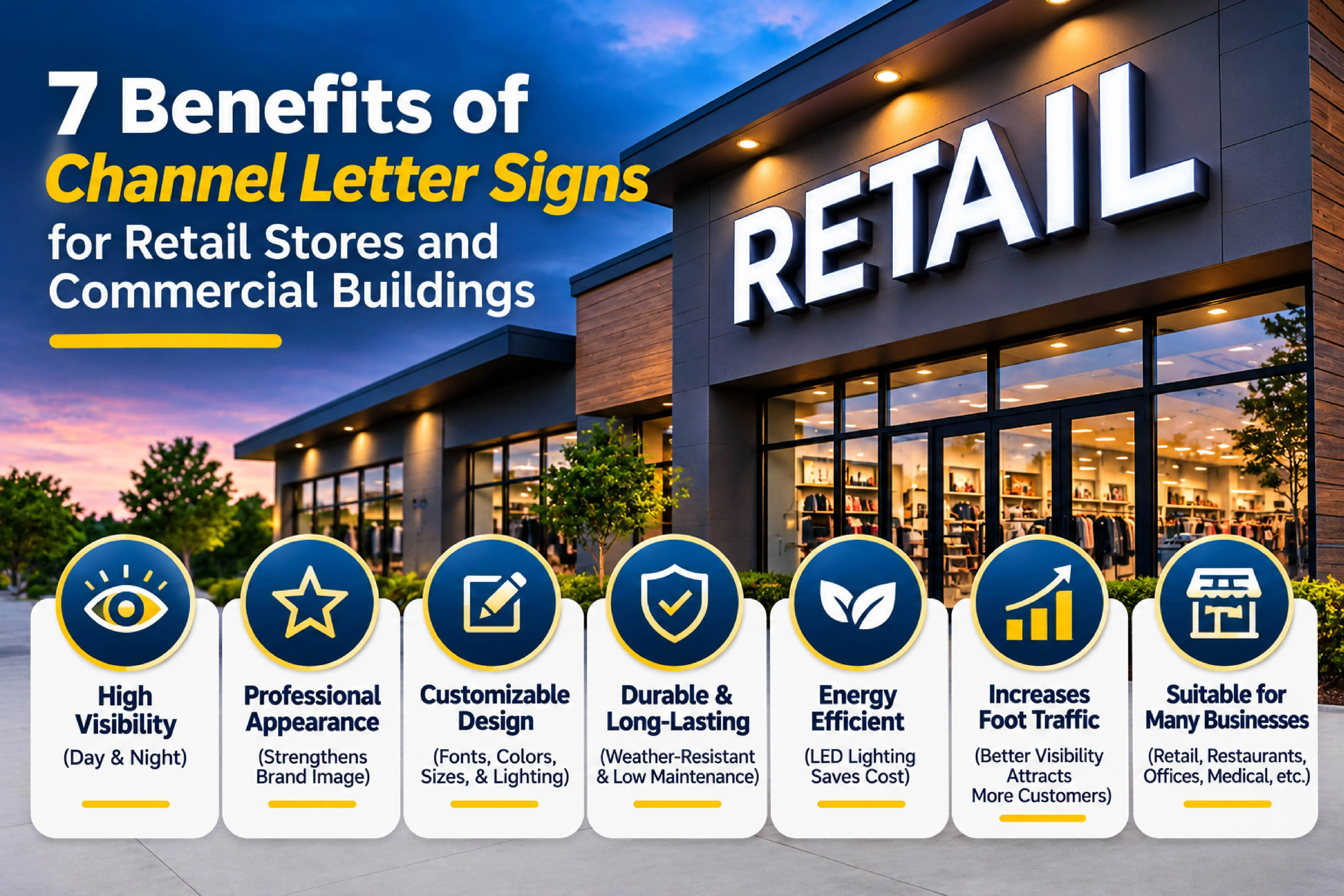
7 Benefits of Channel Letter Signs for Retail Stores and Commercial Buildings
1. Improve Storefront Visibility
Well-positioned lettering with appropriate size and contrast helps customers identify a location from nearby roads, parking areas, and walkways.
2. Strengthen Brand Recognition
Custom letterforms, colors, and logo elements help connect a storefront to other brand touchpoints.
3. Provide Day and Night Visibility
Illuminated configurations can make a business name easier to identify after sunset, especially for evening operations.
4. Create a Professional Appearance
Dimensional letters add depth and can complement the architecture when the design is properly scaled.
5. Offer Flexible Design Options
Businesses can choose letter sizes, finishes, lighting effects, and mounting methods to fit different buildings.
6. Suit Different Commercial Environments
Channel letters can work for restaurants, offices, retailers, and other properties when designed for site-specific conditions.
7. Provide Long-Term Signage Value
Suitable materials, sound installation, and routine care can support years of service; performance depends on exposure, fabrication quality, and components.
Illuminated vs. Non-Illuminated Channel Letters: Which Is Better?
Both options can be effective. The best choice depends on when the sign must be visible, the surrounding light, building restrictions, and the project budget.
| Consideration | Illuminated | Non-illuminated |
|---|---|---|
| Nighttime visibility | Internal lighting improves visibility after dark | Relies on available ambient or external lighting |
| Appearance | Glowing faces, halos, or combined effects | Raised dimensional lettering |
| Energy use | Uses electricity for illumination | No electricity required for internal illumination |
| Maintenance | May require LED, power supply, or wiring service | Generally fewer lighting-related maintenance needs |
| Initial cost | Often higher because of lighting and electrical work | Often lower, depending on materials and design |
| Best suited for | Businesses requiring visibility after dark | Daytime-focused or adequately lit locations |
For an evening business or a location with limited ambient light, illumination may be worthwhile. For a business that closes before dark, non-illuminated letters may meet its needs. Compare total ownership costs—including electrical work, servicing, and maintenance—not only the initial quote.
When Should You Invest in Custom Channel Letter Signs?
Opening a New Location
Prominent, readable signage helps customers identify a new storefront and find its entrance.
Rebranding or Updating a Storefront
New lettering can align the physical location with an updated name, logo, or visual identity.
Replacing Hard-to-Read Signage
Faded letters, poor contrast, or insufficient sizing can make a storefront difficult to recognize.
Improving Nighttime Visibility
Evening operations may benefit from illumination, subject to local rules and property restrictions.
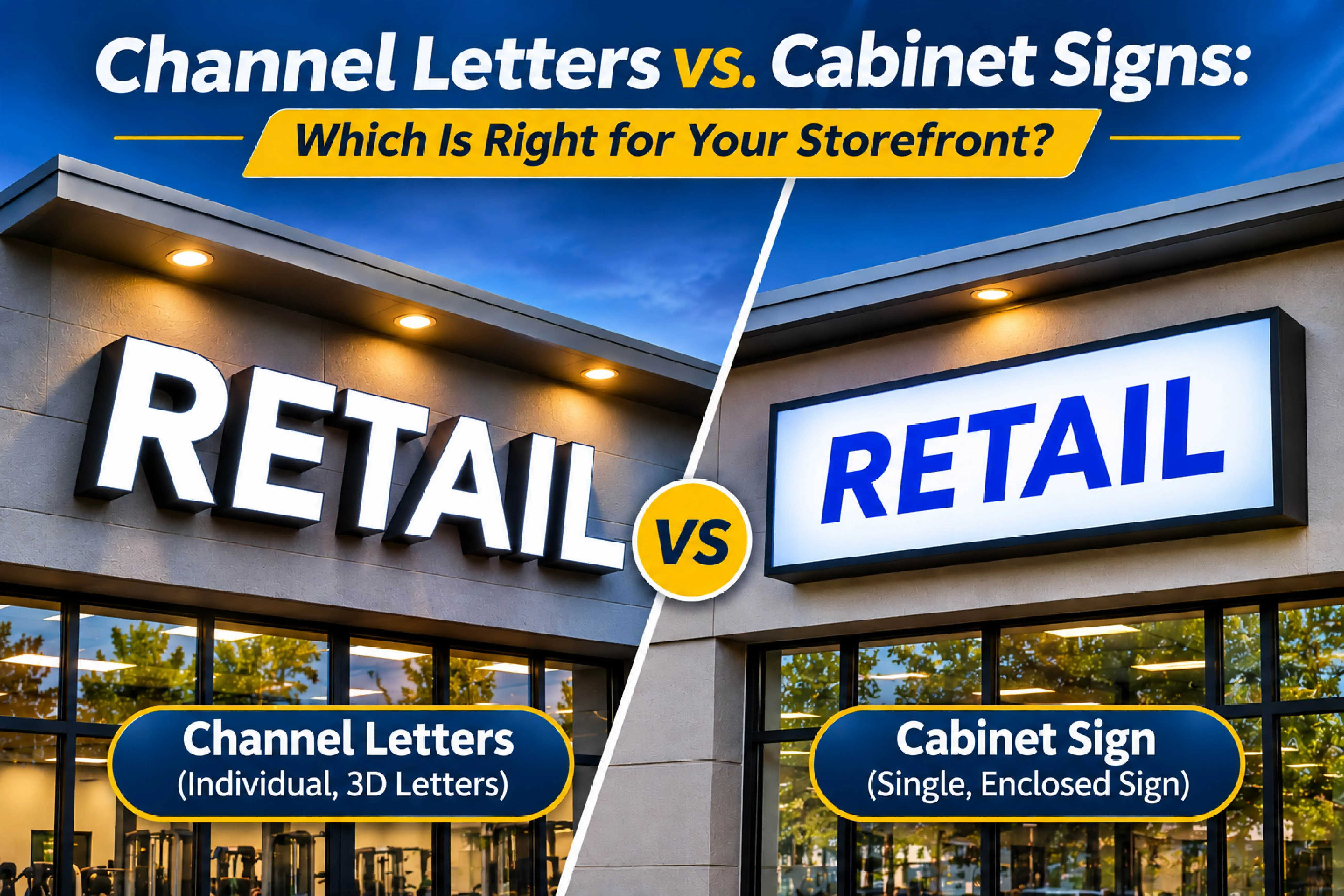
Channel Letters vs. Cabinet Signs: Which Is Right for Your Storefront?
Channel letters are individual dimensional letters or shapes. Cabinet signs typically use a single enclosed sign body with a graphic face containing the name, logo, or message.
| Feature | Channel letters | Cabinet signs |
|---|---|---|
| Construction | Individual letters or shapes | One enclosed sign cabinet |
| Appearance | Distinct dimensional letterforms | Unified sign face or panel |
| Design fit | Brand names and distinctive letterforms | Layouts with multiple graphic or text elements |
| Cost | Depends on fabrication, lighting, and mounting | Depends on size, face, lighting, and installation |
Neither option is always less expensive. Compare actual dimensions, access, electrical requirements, landlord restrictions, and maintenance before deciding.
How to Choose the Right Channel Letter Signs for Your Business
Choose Letter Size for Viewing Distance
A sign seen from a nearby sidewalk has different requirements from one intended for approaching drivers. Consider distance, speed, angle, visual clutter, and available facade space.
Select Colors With Clear Contrast
Choose colors that reflect your brand while remaining distinguishable from the wall in sunlight and artificial light.
Use Readable Fonts and Letter Shapes
Highly decorative fonts or narrow strokes can reduce legibility at a distance. Balance brand character with clear spacing and letterforms.
Evaluate the Building Facade
Wall materials, structural conditions, access, wiring routes, and mounting restrictions influence the design.
Confirm Permits and Property Requirements
Check municipal sign rules, landlord approval, zoning, sign dimensions, and any illumination or electrical restrictions before fabrication.
Raceway Mounting vs. Direct Mounting
Raceway mounting attaches the letters to a shared enclosure, which can contain wiring and help organize installation. Direct mounting attaches individual letters to the building surface for a more separated appearance. The right method depends on the wall, wiring access, structural support, appearance goals, and approvals. Direct mounting does not eliminate the need for safe electrical routing.
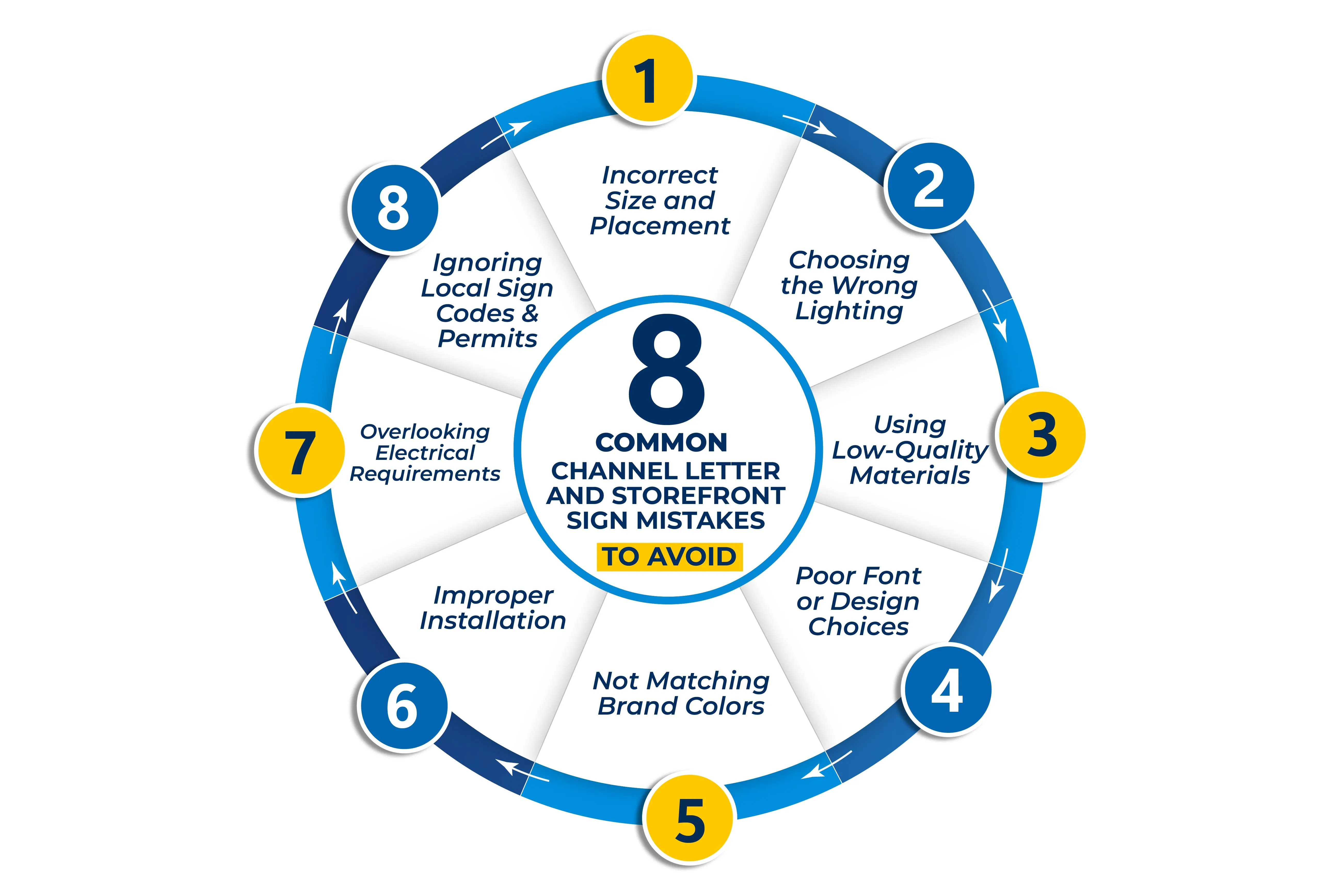
8 Common Channel Letter Sign Mistakes to Avoid
- Letters that are too small: Check readability at the actual viewing distance.
- Low-contrast colors: Test the letters against the building surface.
- Hard-to-read fonts: Favor legibility over unnecessary detail.
- Ignoring nighttime conditions: Assess the lighting available after dark.
- Choosing lighting only for appearance: Consider readability and site requirements.
- Overlooking mounting conditions: Evaluate the facade and wiring access early.
- Skipping permit checks: Confirm local and property requirements before ordering.
- Comparing only upfront prices: Include installation, electricity, maintenance, and expected service needs.
What to Know Before Ordering Custom Channel Letter Signs
What Information Should You Provide for a Quote?
Share the business name, vector logo files if available, preferred colors, approximate dimensions, installation address, building photos, lighting preference, and any landlord sign criteria. A site survey may still be needed to confirm conditions.
What Affects Channel Letter Sign Pricing?
- Letter dimensions, depth, quantity, and complexity
- Fabrication materials, finishes, and lighting components
- Raceway or direct mounting requirements
- Electrical work, site access, and installation equipment
- Permits, landlord approvals, and local requirements
Ask for an itemized quote that explains what is included. A single universal price is not reliable because buildings and designs vary.
How Long Does a Channel Letter Sign Project Take?
The full schedule can include design, revisions, approvals, permitting, fabrication, electrical coordination, and installation. These steps vary by location and project complexity. Ask your provider for a realistic timeline and clarify which approvals must be completed before production.
What Should You Ask Your Sign Company?
Ask about materials, illumination specifications, mounting, warranties, maintenance, installation services, and the expected schedule. Confirm whether permits, electrical work, access equipment, and site preparation are included in the quote.
How Should You Maintain Channel Letter Signs?
Periodically check for visible damage, loose components, fading, and uneven illumination. Clean surfaces using the manufacturer’s recommendations. Have qualified personnel inspect electrical issues or lighting failures rather than opening energized sign components yourself.
Make Your Business Stand Out With the Right Signage
Channel letter signs can help businesses display their names clearly and reinforce storefront branding. Front-lit, halo-lit, combination-lit, and non-illuminated designs each offer different advantages depending on the building, viewing conditions, and budget.
Before ordering, evaluate letter size, contrast, mounting, lighting, maintenance, and local regulations. For businesses in Joplin and Southwest Missouri, All Seasons Signs & Printing can help discuss storefront signage options and project requirements. Contact the team to explore an appropriate solution and request a quote.
Related reading: Essential Printed Materials Every Construction Company Needs.
Frequently Asked Questions
Channel letters are dimensional letters typically fabricated as individual sign units. Other sign letters may be flat or dimensional and can use different materials and construction methods.
They can be illuminated or non-illuminated. Common illuminated styles include front-lit, reverse-lit (halo-lit), and front-and-halo-lit letters.
Service life depends on the quality of the LEDs and power supplies, operating hours, weather exposure, and maintenance. Ask the sign provider about component ratings and warranties.
Cost varies by size, quantity, materials, lighting, mounting, permitting, and installation. A site-specific, itemized quote provides the most useful estimate.
Many installations require sign permits or other approvals. Requirements vary by municipality, zoning, property rules, and electrical configuration; confirm them before fabrication.
Yes. Letterforms, colors, finishes, dimensions, and some logo shapes can be customized, subject to fabrication and installation requirements.
Raceway mounting attaches letters to a shared enclosure that can contain wiring. Direct mounting attaches letters individually to the building surface; wiring and structural requirements still apply.
The timeline depends on design approval, permits, fabrication, site conditions, electrical work, and installation access. Ask for a project-specific schedule rather than assuming a fixed turnaround.
Need Custom Storefront Signage?
Explore signage solutions for your business, including channel letters and other exterior sign options.
Get a Quote Now