


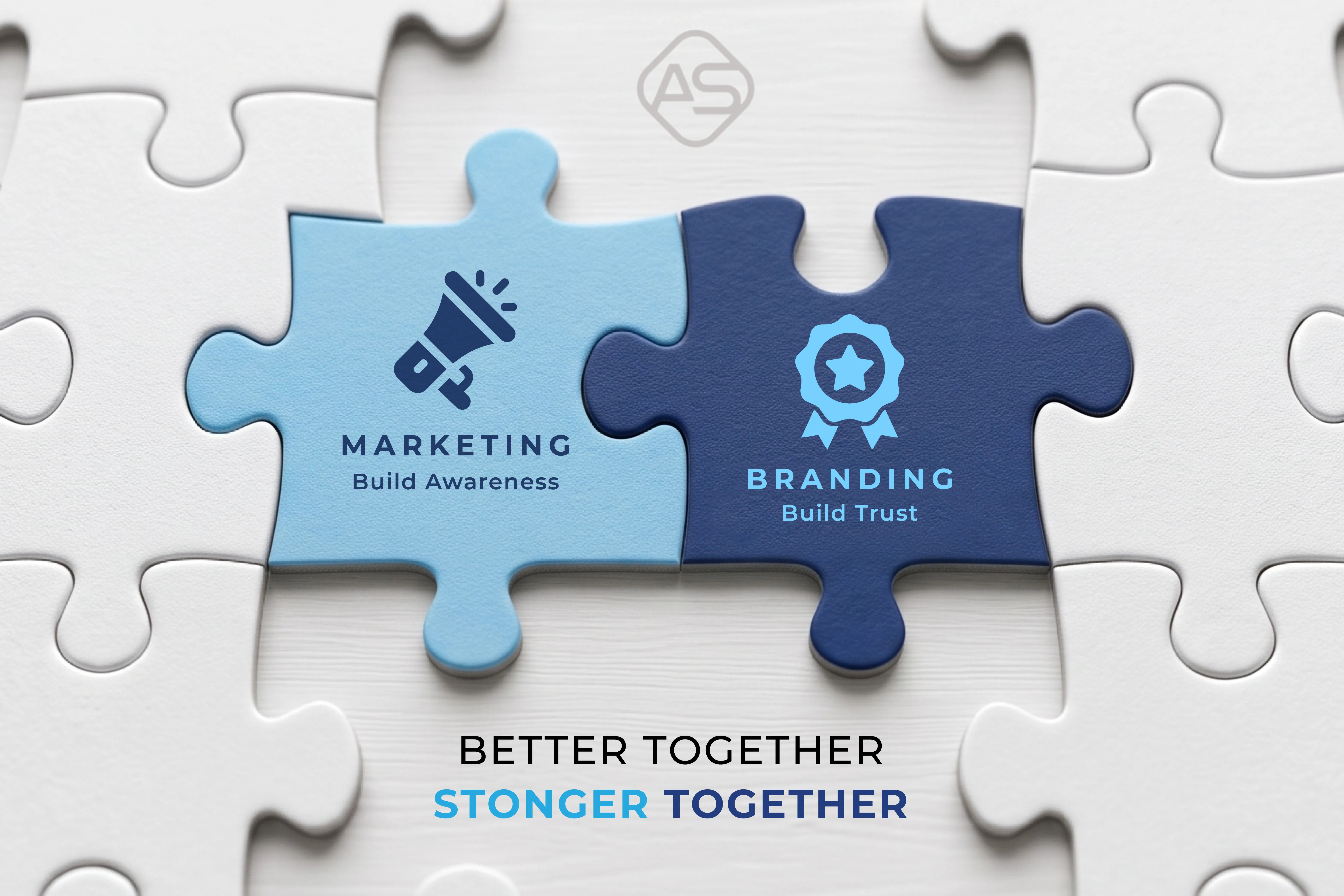
What Is Marketing and Brand Strategy?
Marketing and brand strategy are two of the most important foundations of any successful business. While many people use these terms interchangeably, they serve different purposes and work together to help businesses attract customers, build trust, and increase sales.
Understanding what is marketing and brand strategy can help businesses create consistent messaging, stand out from competitors, and develop long-term customer relationships. Whether you're launching a new business or improving an existing one, having a clear marketing and branding approach is essential.
In this guide, we'll explain the difference between marketing and branding, how they work together, the key elements of each, and why print marketing continues to play an important role in today's digital world.
What Is Marketing?
Marketing is the process of promoting products or services to the right audience. It includes every activity a business uses to attract potential customers, generate interest, and encourage purchases.
A successful marketing strategy focuses on understanding customer needs and delivering the right message through the right channels at the right time.
Common marketing activities include:
- Search engine optimization (SEO)
- Social media marketing
- Email marketing
- Paid advertising
- Content marketing
- Print marketing
- Direct mail campaigns
- Event marketing
For example, a local restaurant may use social media ads, flyers, and promotional banners to announce a grand opening. Each marketing effort works together to increase awareness and drive more customers through the door.
Marketing answers questions such as:
- Who are your customers?
- What problems do they need solved?
- Where can you reach them?
- How will you encourage them to buy?
Without marketing, even excellent products can remain unnoticed.
What Is Branding?
Branding is how people perceive your business. It goes far beyond a logo or company colors. A brand represents your identity, values, personality, and the overall experience customers associate with your company.
Strong branding creates recognition and trust. When customers consistently recognize your business across websites, advertisements, business cards, packaging, and storefront signs, they become more likely to choose your company over competitors.
Branding typically includes:
- Business name
- Logo design
- Brand colors
- Typography
- Voice and messaging
- Company values
- Customer experience
- Visual identity
Think about major companies like Apple or Coca-Cola. People recognize them instantly because every customer interaction reflects a consistent brand identity.
Branding answers questions like:
- Who are you?
- What do you stand for?
- Why should customers trust you?
- How do you want people to remember your business?
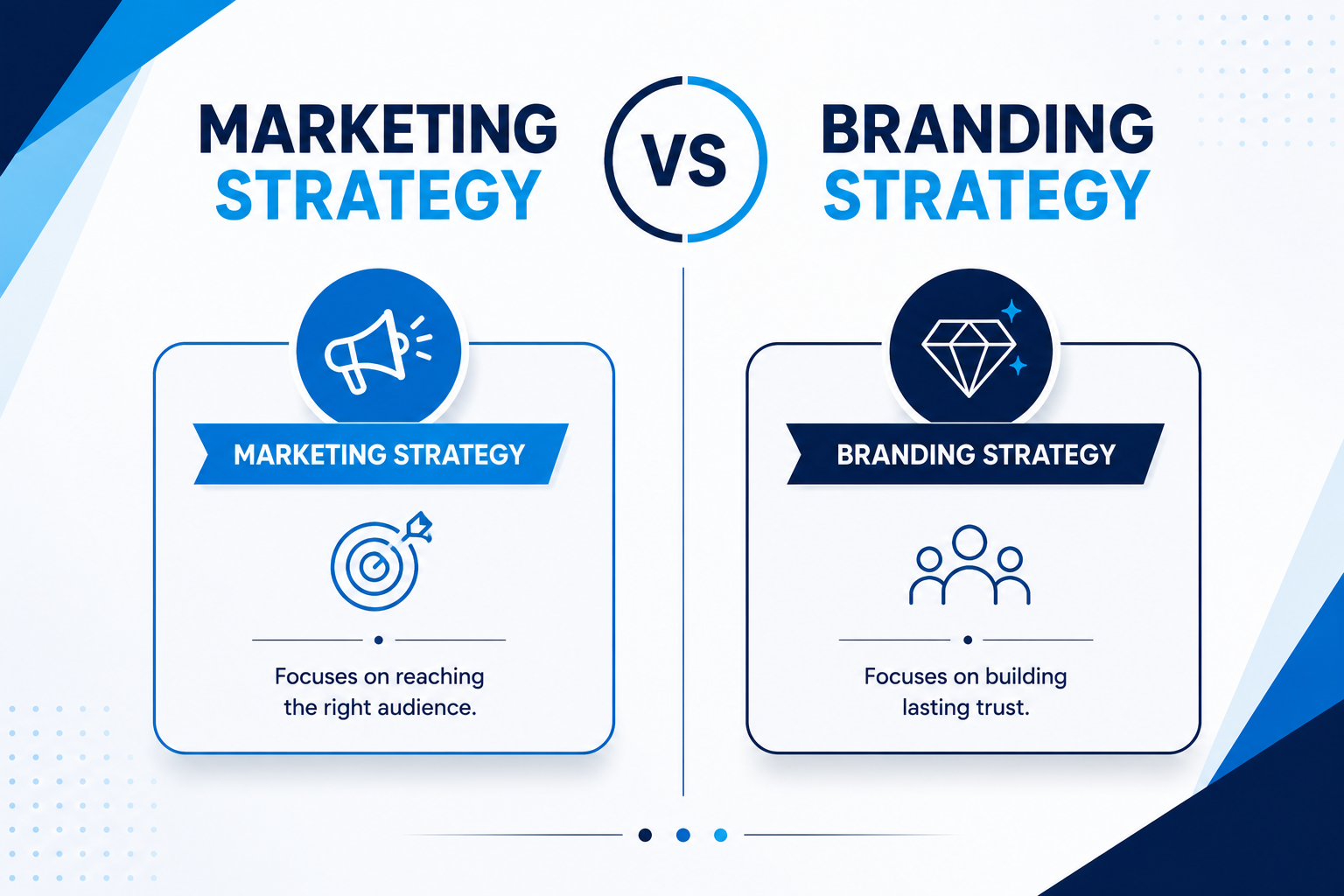
Marketing Strategy vs Branding Strategy
Although marketing and branding work closely together, they have different goals.
Marketing Strategy | Branding Strategy |
|---|---|
Focuses on attracting customers | Focuses on building identity |
Generates leads and sales | Builds trust and loyalty |
Often changes based on campaigns | Remains consistent over time |
Promotes products and services | Shapes customer perception |
Measures traffic and conversions | Measures recognition and reputation |
A simple way to understand the difference is this:
Branding explains who you are. Marketing tells people why they should choose you.
Without branding, marketing lacks direction. Without marketing, branding struggles to reach new audiences.
Businesses achieve the best results when both strategies support one another.
The Essential Elements That Make Branding and Marketing Successful
A strong business doesn't rely on marketing or branding alone—it combines both to create a memorable customer experience. Branding shapes how customers perceive your business, while marketing communicates your value and encourages them to take action. Understanding the core elements of each helps you build a strategy that supports long-term growth and customer loyalty.
Build a Strong and Recognizable Brand Identity
Your brand identity is the foundation of how customers recognize your business. It includes your logo, color palette, typography, messaging, and overall visual style. Keeping these elements consistent across your website, social media, packaging, signage, and printed materials helps establish trust and makes your business easier to remember.
Define Your Brand Voice and Core Values
Your brand voice reflects how your business communicates with customers. Whether your tone is professional, friendly, or approachable, consistency is key. Pairing that voice with clear company values helps customers understand what your business stands for and creates a stronger emotional connection.
Understand Your Target Audience
Every successful marketing strategy starts with knowing your audience. Research your ideal customers, their needs, challenges, and buying habits. When you understand who you're speaking to, you can create marketing messages that are more relevant and effective.
Choose the Right Marketing Channels
Not every customer spends time on the same platforms. An effective marketing strategy uses the channels that best reach your audience, including SEO, social media, email marketing, content marketing, print marketing, and commercial printing. A balanced approach ensures your brand remains visible across multiple touchpoints.
Create Valuable and Consistent Content
Content is one of the most effective ways to educate potential customers and build trust. Blog articles, videos, newsletters, brochures, and social media posts should all provide useful information while reinforcing your brand message. Consistent, high-quality content helps position your business as a reliable industry resource.
Measure Performance and Improve Your Strategy
Marketing is an ongoing process, not a one-time effort. Track important metrics such as website traffic, lead generation, conversions, and customer engagement to understand what's working. Regularly reviewing your results allows you to refine your strategy and improve future marketing campaigns.
Why Consistency Matters
Consistency is one of the biggest factors behind successful branding and marketing.
Imagine receiving a premium-looking brochure from a company, only to visit a website with outdated information and completely different branding. That inconsistency creates confusion and reduces trust.
Maintaining consistency across every marketing channel helps customers recognize your business immediately.
Consistency Means:
- Using the same logo
- Maintaining brand colors
- Consistent messaging
- Similar tone of voice
- Uniform design across digital and printed materials
When customers repeatedly see the same visual identity, they begin to remember and trust your business.
The Role of Emotional Connection
People often buy based on emotions before justifying their decisions with logic.
A strong brand creates emotional connections by making customers feel confident, valued, or inspired.
Businesses build emotional relationships by:
- Sharing authentic stories
- Delivering excellent customer service
- Solving real customer problems
- Supporting local communities
- Providing consistent experiences
For example, a family-owned business that consistently delivers quality service and communicates genuine values often develops loyal customers who recommend it to others.
Brand loyalty isn't built through discounts alone. It's built through trust, reliability, and positive experiences over time.
Printing in Marketing Strategy
While digital marketing continues to grow, print marketing remains one of the most effective ways to reinforce a company's brand identity.
Printed materials provide a physical connection that digital advertisements cannot always achieve. High-quality printed products leave lasting impressions and increase brand recognition.
Businesses often include printing services as part of their overall brand strategy because professionally printed materials communicate credibility and professionalism.
Flyers
Flyers are ideal for promoting events, new product launches, seasonal sales, and local services. They provide customers with information they can keep and revisit.
Business Cards
Business cards continue to be an essential networking tool. A professionally designed business card reflects your brand and helps potential customers remember your company.
Brochures
Brochures allow businesses to present detailed information about products and services while maintaining a polished appearance.
Banners and Signs
Large-format banners and signs increase visibility at trade shows, storefronts, community events, and conferences. Consistent branding on signage reinforces your business identity.
Packaging
Packaging is often the first physical interaction customers have with your brand. Custom packaging with consistent colors, logos, and messaging enhances the customer experience and encourages repeat purchases.
Branded Apparel
Branded apparel such as t‑shirts, hats, polos, and uniforms turns your logo into a walking advertisement. Every time someone wears your brand, they extend visibility beyond traditional print and signage. Apparel also builds professionalism and team spirit when employees wear consistent branded clothing.
Custom apparel works especially well for:
- Company uniforms that reinforce credibility
- Event giveaways that boost exposure
- Promotional merchandise like hats or tote bags
- Staff apparel at trade shows or community events
Like flyers, brochures, and banners, branded apparel strengthens recognition by keeping your logo, colors, and messaging consistent across every customer touchpoint.
Direct Mail
Direct mail campaigns remain effective for reaching local audiences with promotions, coupons, and personalized offers.
Combining digital campaigns with commercial printing creates a balanced marketing strategy that reaches customers through multiple touchpoints.
How Branding and Marketing Work Together
Branding and marketing should never operate separately.
Consider a company launching a new product.
The branding team develops:
- Logo
- Packaging
- Brand colors
- Messaging
- Product identity
The marketing team then promotes that product using:
- Website content
- Social media
- Email campaigns
- Paid advertising
- Flyers
- Banners
- Printed brochures
- Branded apparel
Together, these efforts create a unified customer experience that builds recognition and encourages sales.
Embrace Adaptability and Innovation
In today’s fast-changing market, adaptability is just as important as consistency. Customer preferences, technology, and platforms evolve quickly, so businesses that experiment with new ideas, test emerging channels, and adjust campaigns based on real-time insights often stay ahead of competitors. Innovation in both digital and print marketing—such as interactive social campaigns paired with creative packaging—helps brands remain relevant and memorable. By combining consistency with adaptability, you build a strategy that not only earns trust but also keeps your business future‑ready.
Conclusion
Branding defines who you are, while marketing communicates why customers should choose you. Together, they create a strategy that attracts customers, builds trust, and supports sustainable growth. Whether you’re promoting a local business
or expanding your reach, combining digital marketing with high‑quality print materials ensures a consistent and memorable customer experience. Professionally printed products such as business cards, brochures, banners, signage, branded
apparel, and packaging reinforce your brand at every touchpoint. For businesses in Joplin, Missouri, All Seasons Signs and Printing offers expert
solutions that bring your marketing and branding ideas to life with credibility and impact.
Frequently Asked Questions
Answers to the most common questions about marketing, branding and printing.
Marketing promotes your products or services, while brand strategy defines how customers perceive and remember your business. Together they build awareness, trust, and growth.
Branding creates your business identity, while marketing promotes your products or services to generate leads and sales.
Yes. Branded apparel turns clothing into a walking advertisement while reinforcing professionalism and brand recognition.
Printed materials create a lasting, tangible impression that complements digital marketing and strengthens brand recall.
Professional printing keeps your colors, logos, messaging, and quality consistent across every printed product.
Absolutely. Professionally printed materials help small businesses look more credible and compete with larger brands.
Need Help Bringing Your Brand to Life?
All Seasons Printing can help you create consistent, professional print materials and signage that support your marketing strategy.
Request a Quote