


What Is Print Advertising? A Complete Guide to Types, Benefits & Examples
Introduction
Print advertising remains a valuable marketing strategy for businesses looking to reach customers, increase brand visibility, and create lasting impressions. Even as digital marketing continues to grow, printed advertisements provide a tangible way for businesses to communicate their message and connect with potential customers.From promoting local events and seasonal offers to supporting brand awareness and customer engagement, print advertising plays an important role in both traditional and modern marketing campaigns. Businesses can use printed marketing materials to reach specific audiences, reinforce their brand identity, and complement their online advertising efforts.
Understanding how print advertising works, the different types available, and its advantages can help businesses choose the right approach for their marketing goals. This guide explores print advertising examples, benefits, types, and effective strategies to help businesses make informed marketing decisions.
What Is Print Advertising?
Print advertising is a form of marketing that uses physical printed materials, such as flyers, brochures, postcards, newspapers, magazines, posters, and signs, to promote businesses, products, services, or events. It helps businesses reach potential customers, communicate marketing messages, increase brand awareness, and encourage customer action.
Unlike digital advertising, which appears on websites, search engines, and social media platforms, print advertising uses tangible materials that customers can hold, read, display, or keep for future reference.
Businesses of all sizes, from local restaurants and retail stores to national brands, use print advertising to reach targeted audiences, promote special offers, generate leads, and strengthen brand recognition.
Why Is Print Advertising Still Important?
Many people assume that digital marketing has completely replaced print advertising, but that isn't the case. While online marketing offers speed and broad reach, print advertising provides unique advantages that digital channels often cannot replicate. When used together, print and digital marketing create a well-rounded strategy that helps businesses connect with customers at multiple touchpoints.
Print advertising builds credibility and trust through professionally printed materials like brochures, business cards, and catalogs. Unlike digital ads that disappear quickly, printed materials often stay with customers longer, increasing brand exposure and recall. With fewer distractions than online platforms, print also helps your message stand out. For local businesses, it remains an effective way to reach nearby customers and strengthen brand awareness.
Types of Print Advertising
Print advertising offers a variety of formats to help businesses reach their target audience. Choosing the right type depends on your marketing goals, budget, and the message you want to communicate.
Brochures, Flyers & Business Cards
These are some of the most popular print marketing materials for businesses.
- Brochures provide detailed information about products or services, making them ideal for sales meetings, trade shows, and retail locations.
- Flyers are an affordable way to promote events, sales, and special offers to a broad audience.
- Business cards help professionals share contact information while leaving a lasting first impression.
Direct Mail, Postcards & Catalogs
These print materials are designed to engage customers through targeted marketing.
- Direct mail delivers personalized promotions directly to homes or businesses.
- Postcards are effective for announcing discounts, new products, and local events.
- Catalogs showcase multiple products with images and descriptions, making them ideal for retail and wholesale businesses.
Magazine & Newspaper Advertising
Advertising in magazines and newspapers helps businesses reach specific audiences.
- Magazine ads target readers based on their interests or industry.
- Newspaper ads are ideal for local promotions, public announcements, and community events.
Posters, Banners & Large Format Printing
Large-format print materials are designed to maximize visibility.
- Posters promote events, products, and campaigns in high-traffic locations.
- Banners attract attention at storefronts, trade shows, and outdoor events.
- Other products like yard signs, window graphics, and vehicle graphics further increase brand exposure.
Choosing the Right Print Advertising
The best print advertising format depends on your audience, budget, and marketing objectives. Many businesses combine multiple print materials to build brand awareness, promote their products, and create a consistent marketing campaign.
Benefits of Print Advertising
Print advertising continues to deliver several advantages for businesses.
Builds Trust
Printed materials often appear more credible than online advertisements because customers perceive them as more established and professional.
Creates Long-Lasting Impressions
People tend to remember physical marketing materials longer because they can hold, read, and revisit them.
Improves Local Marketing
Local businesses can effectively target nearby customers through direct mail, newspapers, community magazines, and event flyers.
Strengthens Brand Identity
Consistent use of company colors, logos, typography, and messaging helps reinforce brand recognition across all printed materials.
Less Digital Competition
Unlike crowded online platforms, printed advertisements don't compete with pop-ups, notifications, or endless scrolling.
Print Advertising vs. Digital Advertising: What's the Difference?
Print advertising and digital advertising each have unique strengths, and the best choice depends on your marketing goals, target audience, and budget. While print advertising creates a tangible, lasting impression and works especially well for local marketing, digital advertising offers instant reach, real-time updates, and detailed performance tracking. Instead of viewing them as competing strategies, businesses often achieve the best results by using both together.
| Print Advertising | Digital Advertising |
|---|---|
| Uses physical materials such as brochures, flyers, banners, and business cards. | Uses online channels such as websites, social media, email, and search engines. |
| Can remain with customers for days or weeks, increasing brand recall. | Often viewed briefly before users scroll or move on. |
| Builds trust through tangible, professionally printed materials. | Provides immediate reach and engagement with online audiences. |
| Highly effective for targeting local communities and events. | Ideal for reaching regional, national, or global audiences. |
| Offers a physical, hands-on experience that strengthens brand recognition. | Supports interactive features like videos, clickable links, and online forms. |
| Requires reprinting to make updates or changes. | Campaigns can be edited or optimized instantly. |
The most successful marketing strategies combine print and digital advertising to maximize reach, reinforce brand messaging, and engage customers across multiple channels.
Examples of Print Advertising
Print advertising is used across many industries to promote products, services, and events. Depending on your marketing goals, different print materials can help increase brand awareness, attract customers, or drive sales. Here are some of the most common examples of print advertising:
- Business Cards – Share contact information and create a professional first impression.
- Brochures – Showcase products, services, or company information in a detailed format.
- Flyers – Promote special offers, events, or new product launches at an affordable cost.
- Postcards – Ideal for direct mail campaigns, seasonal promotions, and customer outreach.
- Posters – Capture attention in high-traffic locations for events and promotional campaigns.
- Catalogs – Display multiple products with images, descriptions, and pricing.
- Restaurant Menus – Highlight menu items while reinforcing the restaurant's brand.
- Trade Show Banners – Increase visibility and attract visitors at exhibitions and events.
- Window Graphics – Turn storefront windows into eye-catching advertising space.
- Yard Signs – Promote businesses, real estate listings, political campaigns, or community events.
- Vehicle Wraps – Transform cars, trucks, vans, and fleets into mobile advertisements that increase brand visibility and reach potential customers wherever they travel.
Each type of print advertising serves a unique purpose, and many businesses combine several of these materials to create a well-rounded marketing strategy.
How to Create an Effective Print Advertisement?
An effective print advertisement does more than look good; it communicates the right message to the right audience and encourages them to take action. A well-designed ad combines compelling content, strong visuals, and clear branding to make a lasting impression.
Know Your Audience
Start by understanding who you're trying to reach. Knowing your audience's needs and interests helps you create a message that feels relevant and increases the chances of engagement.
Write a Strong Headline
Your headline should capture attention immediately and communicate the main benefit of your product or service. Keep it short, clear, and easy to understand.
Keep the Message Simple
Focus on one key message instead of overwhelming readers with too much information. Clear and concise content is easier to read and more memorable.
Use Professional Design
High-quality images, readable fonts, and consistent brand colors help your advertisement look polished and build trust with potential customers.
Include a Clear Call to Action
Tell readers what to do next, whether it's visiting your website, calling your business, scanning a QR code, or stopping by your store. A simple call to action makes it easier for customers to take the next step.
Maintain Consistent Branding
Every print advertisement should reflect your brand. Using consistent colors, fonts, logos, and messaging helps customers recognize your business and builds a stronger, more professional brand image over time.
Common Print Advertising Mistakes
Even a well-designed print advertisement can fail to deliver results if it includes common design and messaging mistakes. One of the biggest errors is trying to include too much information, which can overwhelm readers and distract from the main message. Using low-quality images, difficult-to-read fonts, or poor color contrast can also reduce the advertisement's visual appeal and make it less effective.
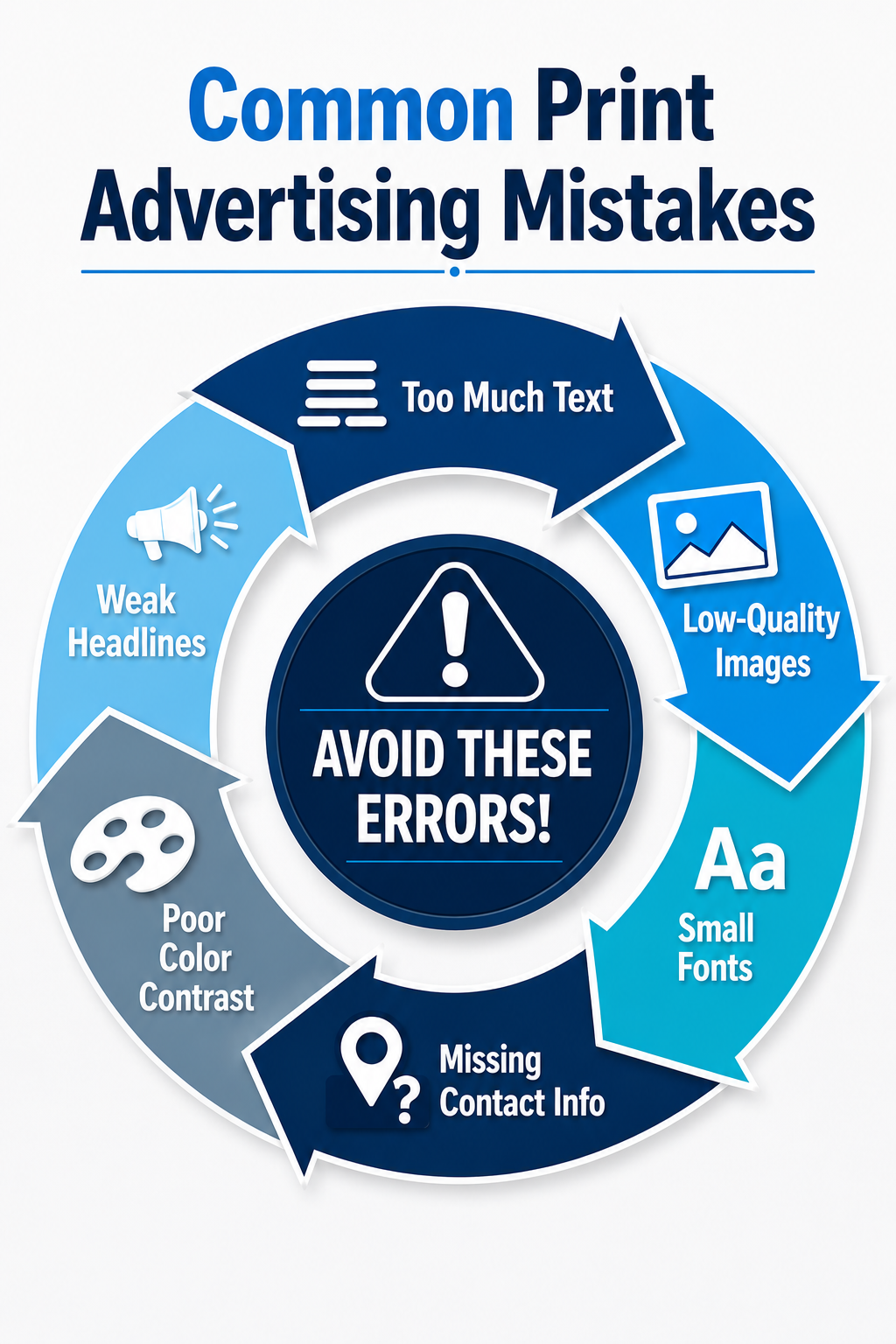
Another common mistake is writing a weak headline that doesn't capture attention or forgetting to include essential contact information such as a phone number, website, or business address. Most importantly, every print advertisement should include a clear call to action that tells readers what to do next, whether it's visiting your website, calling your business, or visiting your store. In most cases, simple, well-organized advertisements with a focused message perform much better than cluttered designs.
Is Print Advertising Still Effective?
Yes, print advertising is still highly effective, especially when it's part of a broader marketing strategy. While digital marketing offers speed and wide reach, printed materials help businesses build trust, increase local visibility, and create a lasting impression. Because print advertisements are tangible, customers are more likely to remember and engage with them than content they quickly scroll past online.
Today, many businesses combine print advertising with digital marketing to create a seamless customer experience. By adding QR codes, website URLs, social media handles, personalized landing pages, or promotional coupon codes to printed materials, businesses can encourage customers to move from offline to online channels. This integrated approach makes campaigns more engaging, easier to measure, and more effective at reaching customers across multiple touchpoints.
Why Professional Printing Matters?
Professional printing plays a crucial role in the success of any print advertising campaign. Even the most creative design can lose its impact if it is printed with poor color accuracy, blurry images, low-quality materials, or an unprofessional finish. High-quality printing ensures your marketing materials reflect the credibility and professionalism of your business.
Beyond appearance, professional printing also improves durability and consistency. Whether you're printing business cards , brochures , flyers , banners , catalogs, or direct mail pieces, experienced printers use quality materials and advanced printing technology to produce sharp text, vibrant colors, and long-lasting results. This attention to detail helps create a positive first impression and strengthens your brand identity .
Professional printing services can also guide you in selecting the right paper stock, finishes, sizes, and printing methods based on your marketing goals and budget. Their expertise helps ensure that your materials not only look great but also perform effectively in real-world situations, whether they're distributed at trade shows, displayed in storefronts, or mailed directly to customers.
In addition, professional printers provide greater accuracy, faster turnaround times, and consistent quality across every print run. This is especially important for businesses that need large quantities of marketing materials while maintaining a cohesive brand image.
Ultimately, investing in professional printing helps maximize the effectiveness of your print advertising. High-quality printed materials leave a stronger impression, build customer trust, and support your overall marketing efforts, making them a valuable investment for businesses of all sizes.
Conclusion
Print advertising continues to be one of the most reliable ways to connect with customers, promote products, and strengthen brand recognition. From business cards and brochures to banners and direct mail campaigns, printed marketing materials offer lasting visibility that complements digital marketing efforts.
When thoughtfully designed and professionally printed, print advertisements can help businesses attract new customers, build trust, and support long-term growth. Whether you're launching a new product, promoting a local event, or increasing brand awareness, combining print and digital marketing creates a well-rounded strategy that delivers lasting results.
All Seasons Printing can help businesses create high-quality printed materials that support their marketing goals. With the right print strategy, businesses can make a strong impression and stay connected with their customers.
Frequently Asked Questions
Answers to common questions about print advertising.
Print advertising promotes a business, product, service, or event through physical materials such as brochures, flyers, postcards, banners, catalogs, and business cards.
It creates a tangible experience, supports local marketing, builds trust, and often stays with customers longer than digital advertisements.
Common formats include brochures, flyers, business cards, direct mail, postcards, catalogs, newspaper and magazine ads, posters, banners, yard signs, window graphics, and vehicle wraps.
Print creates a physical and lasting impression, while digital advertising offers quick updates, broad reach, interaction, and detailed performance tracking.
An effective print ad uses a strong headline, a focused message, professional design, consistent branding, and a clear call to action.
Avoid clutter, low-quality images, hard-to-read fonts, weak headlines, missing contact details, and unclear calls to action.
Ready to Put Print Advertising to Work?
All Seasons Printing can help you create professional brochures, flyers, postcards, banners, signs, direct mail, and other printed materials that support your marketing goals.
Request a Quote