


What Is Sign Manufacturing?
Have you ever wondered how a simple business logo becomes a large storefront sign or how directional and safety signs are produced with such precision? The answer lies in sign manufacturing a specialized process that transforms creative ideas into durable, functional, and visually appealing signage.
From small businesses and retail stores to manufacturing facilities, schools, healthcare organizations, and corporate offices, custom signs help businesses communicate, build brand recognition, and improve customer experiences. Today's sign manufacturing combines creative design, advanced printing technology, precision fabrication, and expert craftsmanship to produce signs that are built to last.
In this guide, we'll explain what sign manufacturing is, why it's important, how custom signs are made, the technologies involved, and what businesses should consider when choosing a professional sign manufacturer.
Sign manufacturing is the process of designing, fabricating, and producing custom signs for businesses, organizations, and public spaces. Unlike basic printing, sign manufacturing involves multiple stages, including planning, material selection, digital printing, fabrication, finishing, and installation.
The goal is to create signage that not only looks professional but also performs effectively in its intended environment. Whether a sign is designed for indoor branding, outdoor advertising, customer navigation, or workplace safety, each project is tailored to meet specific business objectives.
Modern sign manufacturing combines traditional craftsmanship with advanced equipment to produce signs that are durable, visually striking, and capable of withstanding everyday wear and changing weather conditions.
Why Sign Manufacturing Matters for Businesses
Professional signage is one of the most valuable investments a business can make. Well-designed signs communicate information instantly while reinforcing your brand identity.
Quality signage helps businesses:
Strengthen Brand Visibility
Consistent, professionally manufactured signs make businesses easier to recognize and remember. A well-crafted sign creates a positive first impression and builds credibility with customers.
Improve Customer Experience
Clear and attractive signage helps visitors locate entrances, departments, parking areas, and important information without confusion.
Support Workplace Safety and Compliance
Safety signs communicate hazards, emergency procedures, restricted areas, and operational guidelines, helping organizations create safer environments for employees and visitors.
Create Long-Term Marketing Value
Unlike many advertising methods, quality signage continues promoting your business every day with minimal ongoing costs.

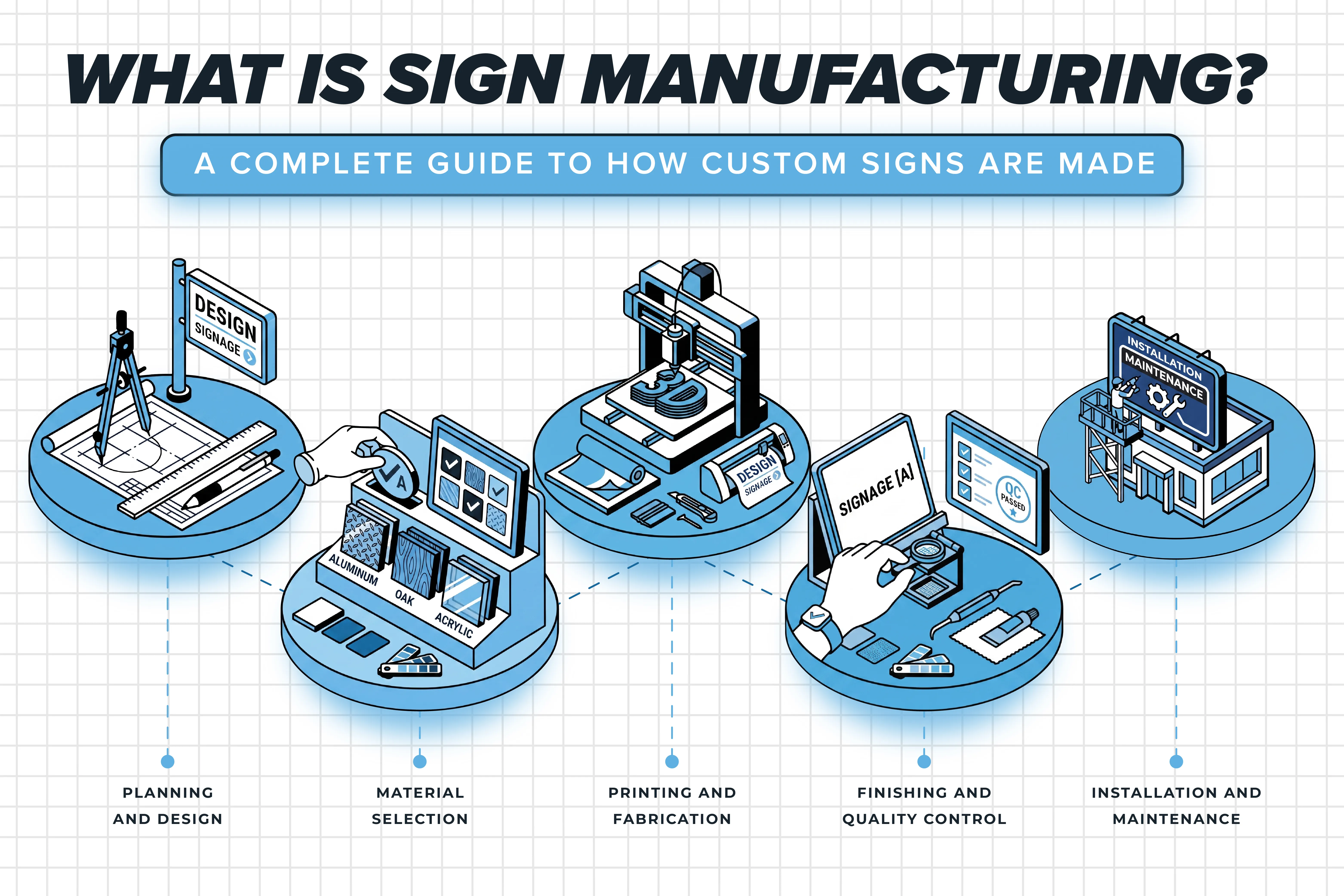
How Signs Are Manufactured: A 5-Step Process
Every sign project follows a structured workflow to ensure quality, accuracy, and durability.
Step 1: Planning and Design
The process begins by understanding the project's goals, location, audience, and branding requirements. Designers create layouts, select typography, choose colors, and prepare digital proofs before production begins.
Step 2: Material Selection
Selecting the right material depends on where the sign will be installed and how it will be used. Factors such as weather exposure, durability, appearance, maintenance, and budget all influence this decision.
Step 3: Printing and Fabrication
Once approved, graphics are printed using advanced digital printing technology. Specialized fabrication equipment cuts, shapes, and assembles the sign components with precision to create the final product.
Step 4: Finishing and Quality Control
Protective coatings, laminates, paint, or other finishing techniques are applied to improve durability and appearance. Each sign is carefully inspected to ensure it meets quality standards before delivery.
Step 5: Installation and Maintenance
The completed sign is professionally installed to maximize visibility and structural integrity. Regular cleaning and maintenance help preserve its appearance and extend its lifespan.
What Factors Influence Sign Manufacturing?
Every sign is unique, and several factors affect how it is manufactured.
Purpose and Location
A sign intended for outdoor branding has different requirements than one used indoors for wayfinding or informational purposes.
Environmental Conditions
Sunlight, rain, humidity, temperature changes, and wind exposure all influence material selection and finishing techniques.
Material Performance
Different materials provide varying levels of durability, weight, flexibility, and resistance to weather and impact.
Budget and Project Scope
Project size, complexity, installation requirements, and production methods all contribute to overall costs.
Local Regulations
Many commercial signs must comply with local building codes, zoning regulations, and permit requirements before installation.
Materials Commonly Used in Sign Manufacturing
Choosing the right material is essential for both appearance and longevity.
Businesses often evaluate materials based on:
Durability and Weather Resistance
Outdoor signs require materials capable of withstanding moisture, UV exposure, and changing weather conditions.
Appearance and Finish
Materials vary in texture, color options, gloss levels, and overall visual impact.
Sustainability
Many organizations now prefer recyclable or environmentally responsible materials to support sustainability initiatives.
Cost and Performance
Balancing quality, longevity, and budget helps businesses select materials that provide the best long-term value.
Technologies Used in Modern Sign Manufacturing
Digital Printing and UV Printing
Digital printing has become one of the most widely used technologies in sign manufacturing because it delivers vibrant colors, sharp graphics, and exceptional image quality. Unlike traditional printing methods, digital printing transfers artwork directly from a digital file to the printing equipment, making it ideal for custom projects, short production runs, and quick turnaround times. It also allows businesses to easily personalize signs with unique designs, branding elements, or promotional messages.
CNC Routing and Precision Fabrication
After the graphics are printed, precision fabrication transforms raw materials into finished signage. CNC (Computer Numerical Control) routing uses computer-guided machinery to cut, carve, and shape materials with exceptional accuracy. This technology makes it possible to create custom lettering, dimensional signs, intricate logos, and complex shapes that would be difficult to produce by hand.
Design Software and Production Automation
Modern sign manufacturing begins long before production starts. Advanced design software allows designers to develop detailed layouts, visualize the finished product, and create accurate digital proofs for client approval. This ensures that colors, dimensions, branding elements, and overall design meet expectations before manufacturing begins.
Design Principles for Effective Signage
Even the highest-quality materials won't create an effective sign without thoughtful design.
Successful signage focuses on:
Readability and Typography
Simple fonts and clear layouts make signs easier to read from a distance.
Color and Contrast
Strong contrast improves visibility while reinforcing brand identity.
Visibility and Viewing Distance
Signs should remain easy to recognize from their intended viewing distance.
Brand Consistency
Using consistent logos, colors, and messaging strengthens customer recognition.
Accessibility
Inclusive design ensures signage remains readable and useful for all visitors.
How Different Industries Benefit from Sign Manufacturing
Professional signage is one of the most effective ways to strengthen a company's brand identity. Consistent use of logos, colors, typography, and messaging across storefronts, offices, and facilities helps customers instantly recognize a business. Well-designed signs also create a professional first impression, build trust, and reinforce brand awareness, making businesses more memorable in competitive markets.
Safety signage plays a critical role in protecting employees, customers, and visitors. Warning signs, emergency exit signs, hazard labels, and instructional graphics communicate important safety information and help organizations comply with workplace regulations. Clearly visible safety signs reduce confusion during emergencies, encourage safe behavior, and contribute to a safer working environment.
Effective wayfinding signage makes it easier for people to navigate buildings, campuses, healthcare facilities, warehouses, and commercial properties. Directional signs, room identification signs, and informational displays help visitors quickly locate entrances, departments, parking areas, and other important destinations. Clear navigation improves the overall customer experience while reducing frustration and saving time.
Custom signage helps businesses organize their workspaces and improve daily operations. Labels, identification signs, instructional boards, and workflow signage make it easier for employees to locate equipment, follow procedures, and perform tasks efficiently. In manufacturing facilities, warehouses, and offices, organized signage minimizes errors, improves productivity, and supports smoother business operations.
Eye-catching signage captures attention and encourages customers to interact with a business. Promotional displays, window graphics, digital signs, and point-of-sale messaging help communicate special offers, highlight products, and guide purchasing decisions. Well-placed, professionally designed signage not only attracts new customers but also enhances the overall customer experience, encouraging repeat visits and strengthening brand loyalty.
Common Challenges in Sign Manufacturing
Producing high-quality signage requires careful planning and attention to detail.
Common challenges include:
Selecting materials suited to the environment
Balancing cost with long-term durability
Designing signs that remain readable from a distance
Meeting installation and permitting requirements
Maintaining signs over time to preserve appearance
Working with experienced professionals helps businesses avoid these challenges while ensuring reliable results.
How to Choose the Right Sign Manufacturing Company
Experience and Manufacturing Expertise
Look for a company with proven experience in sign manufacturing and a portfolio of successful projects. An experienced team understands different materials, production techniques, and installation requirements, allowing them to recommend the most suitable solution for your business. Modern manufacturing equipment and skilled craftsmanship also contribute to producing high-quality, long-lasting signs.
Design, Quality, and Customization
A professional sign manufacturer should offer creative design support along with strict quality control throughout the production process. From creating accurate proofs to selecting durable materials and inspecting the finished product, every step should focus on delivering signage that reflects your brand and performs well in its intended environment. Customization options also ensure your sign meets your specific business goals.
Installation and Customer Support
The best sign manufacturers provide more than just production services. Professional installation ensures your sign is securely placed, highly visible, and compliant with local regulations. Responsive customer support, clear communication, and after-sales assistance can make the entire experience smoother and help maintain your signage for years to come. Choosing a full-service sign manufacturing company gives you confidence that your project will be handled professionally from concept to completion.
What Are the Future Trends in Sign Manufacturing?
Sustainable Materials and Eco-Friendly Manufacturing
Environmental responsibility is becoming a priority in the signage industry. Manufacturers are increasingly using recyclable materials, eco-friendly inks, and sustainable production processes to reduce waste while maintaining high-quality results. These practices not only support sustainability goals but also appeal to environmentally conscious businesses.
Smart Technology and Production Automation
Automation, AI-assisted design, and advanced manufacturing equipment are transforming how signs are produced. These technologies improve production accuracy, reduce turnaround times, and allow manufacturers to create highly customized signage with greater efficiency. Smart digital signage is also becoming more interactive, enabling businesses to deliver dynamic content and enhance customer engagement.
Customization and Innovation
Businesses are looking for signage that reflects their unique brand identity and adapts to changing customer needs. As a result, manufacturers are focusing on personalized designs, innovative materials, and faster production methods that deliver durable, visually appealing signage. This trend allows companies to create memorable customer experiences while staying competitive in an evolving marketplace.
Conclusion
Sign manufacturing is much more than printing graphics on a surface. It is a comprehensive process that combines strategic planning, creative design, quality materials, precision fabrication, advanced technology, and professional installation to produce signage that supports branding, communication, safety, and long-term business growth.
If you're looking for expertly crafted custom signage, All Seasons Signs is here to help. From concept and design to fabrication and installation, our experienced team creates high-quality signage tailored to your business goals. Contact All Seasons Signs and Printing in Joplin, Missouri today to discuss your next project and discover how professional sign manufacturing can help your business stand out.
Frequently Asked Questions
Answers to common questions about sign manufacturing.
Sign manufacturing is the complete process of designing, producing, fabricating, finishing, and installing custom signs for businesses and organizations.
Custom signs are typically created through five stages: planning, material selection, printing and fabrication, finishing, and installation.
Sign printing focuses on producing graphics, while sign manufacturing includes design, fabrication, assembly, finishing, and installation in addition to printing.
Manufacturers use various materials depending on the project's requirements, considering factors such as durability, weather resistance, appearance, and budget.
Production time depends on the sign's size, complexity, materials, and installation requirements. Simple projects may take only a few days, while larger custom signs can require several weeks.
Material choice, size, design complexity, finishing options, installation requirements, and project scope all influence the final cost.
With quality materials and proper maintenance, many commercial signs can last for years, even in outdoor environments.
Many full-service sign manufacturers provide professional installation to ensure the sign is securely mounted and complies with local regulations.
Professional manufacturing ensures your signage is durable, visually appealing, accurately produced, and capable of representing your brand effectively.
Look for experience, design expertise, advanced production capabilities, quality control processes, installation services, and a proven reputation for delivering reliable results.
Need Custom Signs for Your Business?
All Seasons Printing can help with professional sign design, manufacturing, printing, and signage solutions for businesses throughout Joplin and Southwest Missouri.
Request a Quote